
Close your eyes for a second and imagine it’s a Tuesday evening, exactly twenty-five years from today. You’re sitting in your favorite chair, the house is quiet, and you’re looking through a box of old photos. You see your kids as toddlers, that vacation you saved for years to take, and the house you worked so hard to turn into a home.
In this future, are you breathing a sigh of relief because you know everything is handled? Or is there a tiny, nagging knot in your stomach because you aren’t sure if the safety net you built decades ago is still there to catch you?
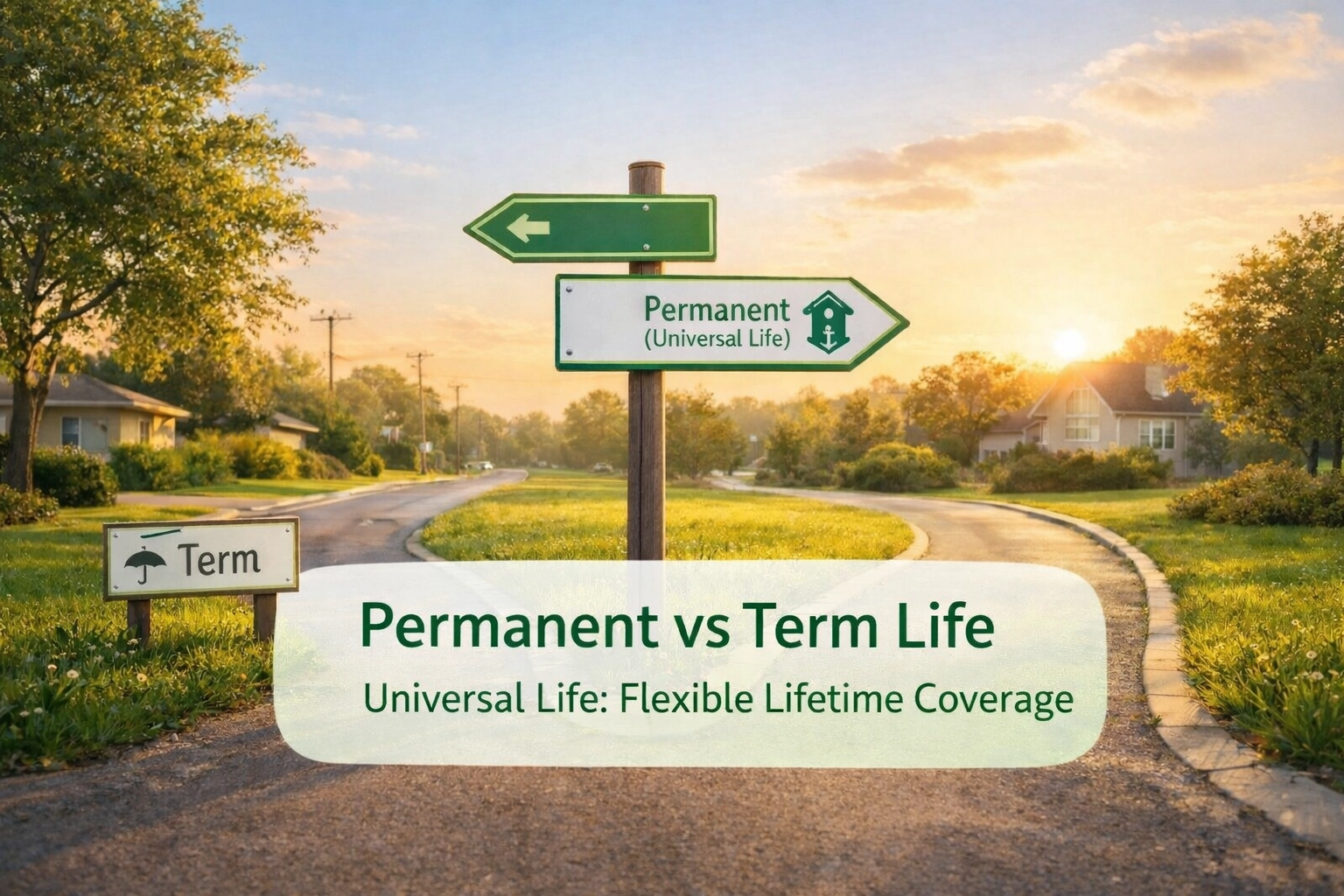
Choosing between term and permanent life insurance often feels like trying to pick a path through a thick fog. Both promise to protect the people you love, but they do it in very different ways. One is like a sturdy umbrella you carry during a storm; the other is like building a permanent roof over your head.
And inside that “permanent” category, Universal Life is the one I spend the most time on with clients—because it can be built to fit real life as it changes.
I want to help you clear that fog. My name is Dupe Akinola, and I believe life insurance explained in plain toddler language is the best way to get started. Let’s dive into the "this or that" of insurance so you can figure out which path leads to your best future.
The Two Paths: A Tale of Two Futures
Think of insurance as a bridge to the future. Depending on your life stage, you might need a different kind of bridge.
Path A: The "Ideal" Protection (Term Life)
Imagine a young professional named Sarah. She’s just bought her first home and has a toddler. Sarah needs a lot of coverage, but she also has a mortgage and daycare bills. She chooses Term Life Insurance.
Term insurance is straightforward. You pay a set fee every month for a specific period, say 10, 20, or 30 years. If the unthinkable happens during that time, your family gets a check. It’s affordable, it’s simple, and it does exactly what it says on the tin. It’s like renting a very secure apartment. You don’t own it, and when the lease is up, you move out.
Path B: The "Unprepared" Reality
Now, imagine someone who thinks, "I’ll handle that later." They skip the coverage because life feels "fine" right now. But life is fragile. Without a plan, a single moment can turn a stable family into one facing crushing financial stress. Without life insurance, here’s what happens when life happens. It’s like patching a leaking roof with duct tape; it might hold for a day, but the storm is eventually coming.

What Exactly is Term Life Insurance?
Term life insurance is the most popular choice for a reason: it’s the most "bang for your buck."
If you are looking for term insurance, you are essentially buying a safety net for your most vulnerable years. For most of us, those are the years when we have a mortgage, young children, and not a lot of savings.
The Pros:
- It’s Affordable: A healthy 30-year-old might pay just $20 or $30 a month for a huge amount of coverage.
- It’s Flexible: You can choose a term that matches your needs (like a 20-year policy that lasts until the kids graduate).
- Simple Logic: You pay the premium, you get the peace of mind.
The Cons:
- It Ends: Once the term is over, the coverage is gone.
- No "Value": If you don’t use it (which is actually a good thing!), you don’t get any money back.
What Exactly is Permanent Life Insurance? (With a Spotlight on Universal Life)
Permanent life insurance is the "forever" lane. It’s coverage designed to last your entire life (as long as you keep up with the policy requirements). And unlike term, it can also include a cash value component.
Think of it like an anchor in a storm. It stays with you for the long haul.
Universal Life Insurance (Our Specialty)
Universal Life (UL) is a type of permanent life insurance that’s often built for people who want long-term protection with more flexibility. In plain terms: it can let you adjust parts of the policy as your life changes—like income, family needs, or business goals.
The Pros (Why people love UL):
- Lifelong Coverage: You’re not betting on a 10/20/30-year window.
- Cash Value Potential: Part of what you pay can build cash value inside the policy (how it grows depends on the UL type and options you choose).
- Flexibility: Many UL policies are designed to be adjustable over time (within the rules of the contract)—which can be a big deal if your budget or needs change.
The Cons (What you need to understand upfront):
- It’s More Involved Than Term: More choices = more decisions. That’s not bad, but it does mean you want guidance.
- Costs Are Higher Than Term: You’re paying for permanent coverage and the structure that comes with it.
- Performance/Structure Matters: The details (fees, funding level, and how the policy is set up) can make a big difference over time.
Where Does Whole Life Fit In?
Whole life is also permanent, but it usually comes with fixed premiums and a more rigid structure. Some people prefer that “set it and forget it” feel. But if you want more ability to tailor the plan, Universal Life is often the better conversation to start with.

The Showdown: Comparing the Two
To make it simple, let's look at them side-by-side.
| Feature | Term Life Insurance | Permanent Life (Universal Life Focus) |
|---|---|---|
| Duration | Specific years (e.g., 20 years) | Designed for lifetime coverage |
| Cost | Very low/Affordable | Higher (because it’s built to last) |
| Cash Value | None | Often available (depends on setup) |
| Payout | Only if you pass during the term | Intended to pay out whenever you pass (as long as policy is in force) |
| Best For | Income replacement & debt | Long-term planning, legacy, and flexible coverage needs |
If you are focused on your path to wealth creation in Canada, you have to secure your income first. Term insurance is often the first step, while permanent coverage—especially Universal Life—can be the longer-term strategy.
Which Is Better For Your Future?
I wish I could give you a one-size-fits-all answer, but honestly? It depends on what keeps you up at night.
Choose Term Life If…
You are in the middle of your "building" years. You have a mortgage, kids, or a business that depends on you. You want maximum protection for the lowest possible cost so you can put your extra money into other investments. It’s about being responsible right now.
Choose Permanent Life (Especially Universal Life) If…
You want coverage that’s built to stay with you long-term—so your loved ones aren’t left hoping a policy is still active when it matters most. Maybe you want to leave a legacy, support a surviving spouse, plan for final expenses, or create a cushion that lasts beyond the kid-years.
If you also like the idea of flexibility as your life evolves, Universal Life is worth a serious look.

The Emotional Weight of the Choice
Let’s be real for a second. Talking about insurance is sobering. It forces us to acknowledge that our time here is finite and our health is fragile. It can feel heavy.
But there is something incredibly empowered about making a decision. When you sign that paper, you aren’t just buying a policy; you are buying a "get out of stress free" card for your family. You are saying, "I care enough about you to make sure you are okay, even if I’m not here."
Without a plan, your family’s future is a question mark. With a plan, it’s a period.
A Formula for Peace of Mind
Here is a simple way to look at it:
- No Insurance = High risk + Constant worry.
- Term Insurance = High protection + Low cost (Temporary).
- Permanent Life (Universal Life focus) = Lifetime protection + Long-term planning + Flexibility.
If you’re still feeling unsure, don’t beat yourself up. Most people are! The important thing is to start the conversation. You don't have to do this alone. Whether you’re looking at insurance in Canada or trying to figure out how it fits into your family wealth plan, the first step is always education.

Final Thoughts
Your future self is waiting for you to make this choice. They want to sit in that chair twenty-five years from now and feel nothing but peace. They want to know that you had the courage to look ahead and protect what matters most.
Whether it’s the affordable "safety net" of term or the "permanent foundation" of permanent life insurance (with Universal Life leading the way for flexibility), the right choice is the one that gets you covered today. Don't wait for "someday." Someday is a dangerous place to leave your family’s security.
I care about your future, and I’m here to help you navigate these waters with a smile. If you want to chat about which option fits your unique life story, reach out. Let’s build that bridge together.
Ready to secure your future?
Call Dupe Akinola on +16393835233.
Warmly,
Dupe Akinola